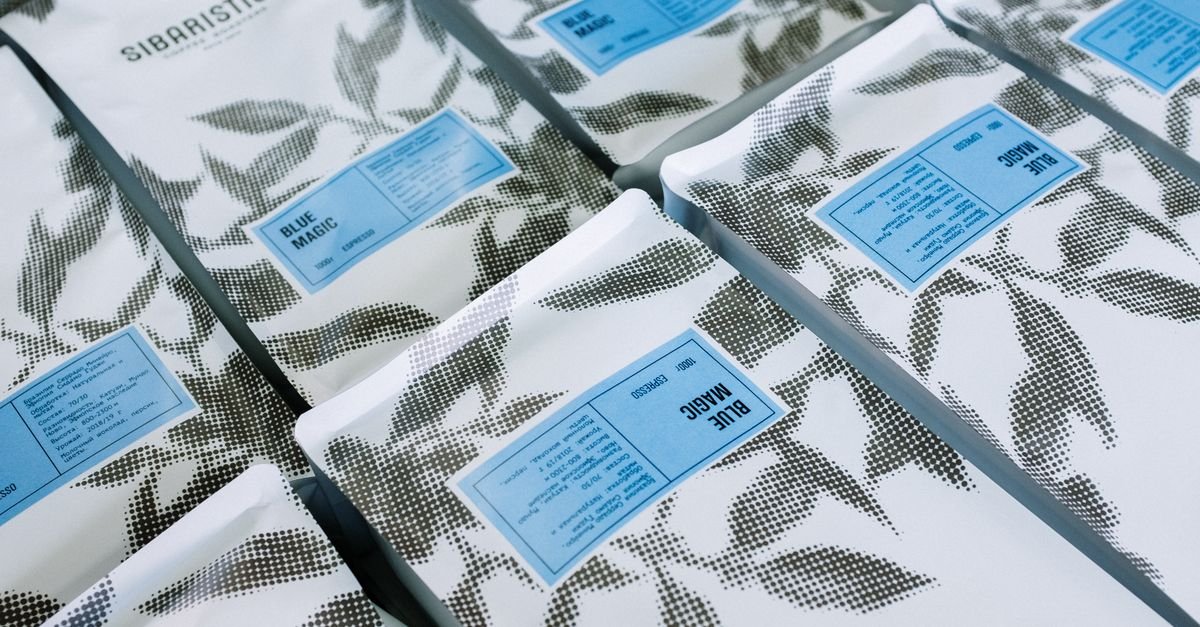
The defect usually shows up once the order is already on the shelf: an oily stain creeping in from the label edge, a corner lifting off the glass, ink smearing under oily fingers. Argan oil is unforgiving to a label chosen for looks alone. Material, adhesive and finish deserve the same care as the bottle and dropper.
Why standard labels fail
Oil reaches the label from several directions: drips during filling, residue on the dropper, the consumer's oily fingers, absorption through unprotected paper edges, and finally loss of grip once oil reaches the adhesive. Three layers must therefore work together: the facestock, the adhesive and the finish.
Facestock
| Material | Strength | Watch out for |
|---|---|---|
| Coated paper with varnish or laminate | Polished look, often lower cost | Cut edges may absorb oil if unprotected |
| Uncoated or textured paper | Premium, crafted feel | More prone to staining; needs a protective finish |
| Plastic film (e.g. polypropylene) | Does not absorb liquids | Ink and finish need validating |
| Direct printing on glass | No adhesive or edge to peel | Better suited to larger runs |
No material is always best. It depends on your brand image, volume and budget. Premium paper can work with argan oil if it is protected and tested with the real oil.
Adhesive
Ask your label printer whether the adhesive is permanent or removable, suited to glass and curved surfaces, how it behaves in contact with oils, and whether it tolerates shipping and storage temperatures. On that last point, see our article on shipping argan oil in hot weather. Do not settle for «strong glue»; request samples made with the exact adhesive you will buy.
Ink and finish
Ink that is stable when dry may smear when oil touches it. Varnish or lamination protects the ink and limits absorption; hot foil looks luxurious but should be rub-tested with an oily finger; solid dark colours show scuffs and stains faster.
Design choices that help
- Keep the top edge away from the shoulder and neck.
- Avoid placing an edge where the bottle is gripped.
- Leave a safe trim margin.
- Put the barcode and batch code in a low-abrasion area.
For label content, especially in Gulf markets, see our guide to bilingual Arabic-English labels.
Acceptance tests before printing
- Apply to a clean, dry bottle and allow the adhesive's recommended set time.
- Place a drop of oil on the face and edge, leave it for hours, then wipe.
- Rub with an oily finger and watch the ink.
- Tilt the bottle so oil reaches the label edge.
- Expose samples to warm and cold conditions, then recheck adhesion.
- Keep before-and-after photos as a reference.
Always use the real argan oil. These checks do not replace the container compatibility tests in our guide to argan oil packaging compatibility.
Who is responsible in private label?
Agree in writing who selects the material and adhesive, who signs off the final proof, who bears the cost of labels damaged on the line and what surplus is acceptable, and whether a label test is run on the pilot batch.
FAQ
Is paper unsuitable for argan oil?
Not necessarily. Paper with varnish or lamination and a suitable adhesive can perform well, provided it is tested with the actual oil.
Why does a label peel weeks later?
Oil, heat or humidity weaken the adhesive gradually, and a small bottle diameter keeps pulling at the edges. Tests should run for days, not minutes.
Is direct glass printing better?
It removes the adhesive issue but generally suits larger runs.
How many extra labels should I order?
The percentage varies with the filling line and label complexity, so agree it with the factory in advance.
Bottom line
A good label is part of product quality. To launch your private label argan oil, request a quote at assilouargane.com/quote.