Every natural plant oil shares one thing: a wealth of fatty acids and vitamins. Yet each has its own signature of texture, aroma and composition. When you build a skincare or culinary product line, choosing the right oil is not a minor detail. It is the decision that shapes how your product feels, how well it works and how your customers remember it. In this article we compare argan oil with four of the most popular natural oils to see when each truly belongs in your formula.
What makes argan oil unique
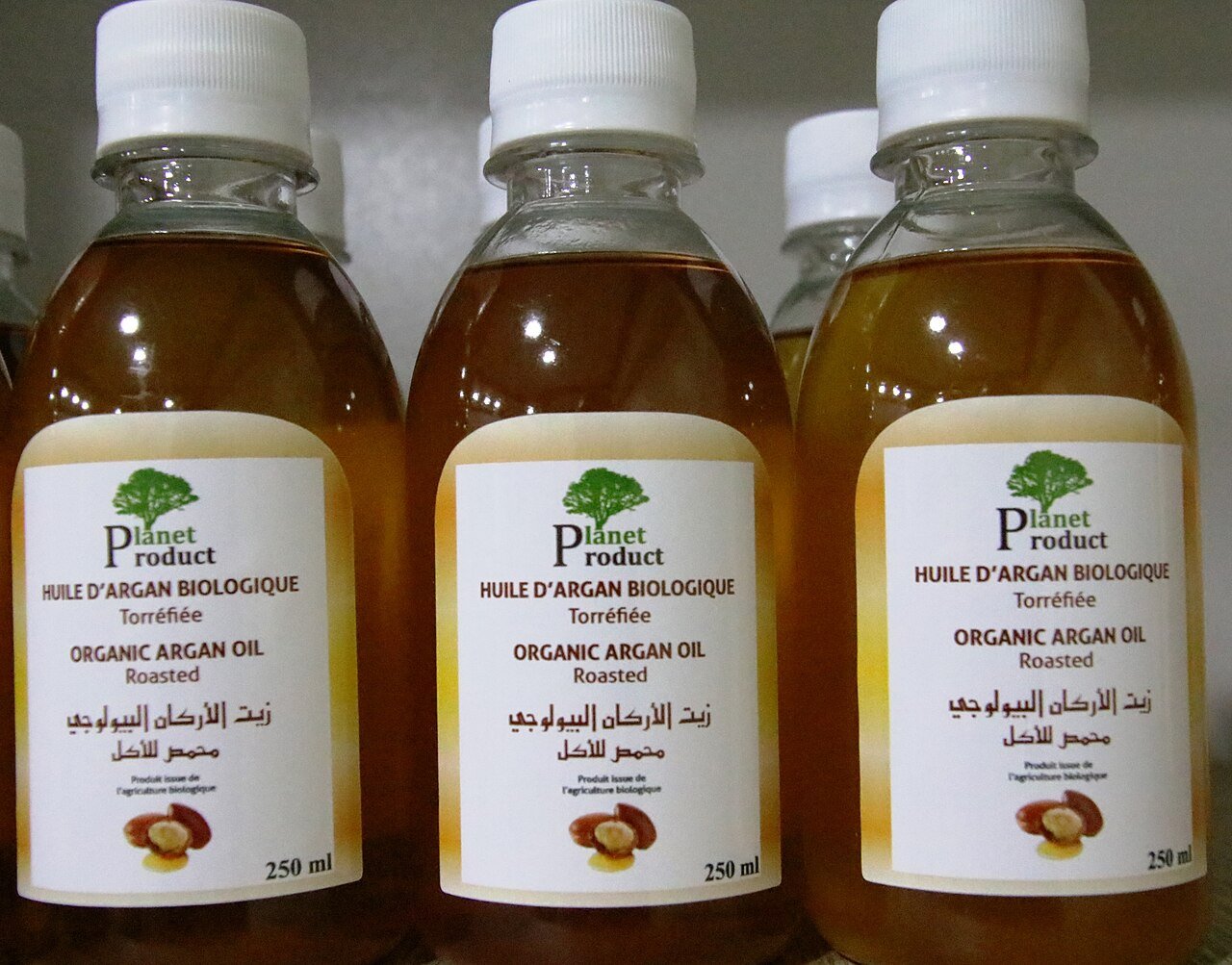
Moroccan argan oil is pressed from the kernel of the argan fruit, a tree that grows only in southwestern Morocco. It stands out for a rare balance of essential fatty acids, a high level of natural vitamin E and antioxidant compounds. This composition gives it the power to moisturise without heaviness, and a texture that skin and hair absorb quickly. Argan also has a culinary version, where the kernels are roasted to produce a distinctive flavour that few other oils can offer.
Jojoba: the closest match to skin
Technically, jojoba is not an oil but a liquid wax whose structure is remarkably close to the skin natural sebum. That makes it a good fit for oily and combination skin, helping to balance oil production. However, it lacks argan richness in vitamin E and nourishing fatty acids, and it is never used in food.
- Choose jojoba for oily skin care and pore balancing formulas.
- Choose argan when you want deeper nourishment and hair shine.
Coconut and olive: strength and richness
Coconut oil is solid at room temperature, rich in saturated acids, and delivers strong protection and a rich feel, but it can clog pores on some skin types. Olive oil is nourishing, dense, ideal for cooking and very dry skin, yet slower to absorb and heavier than argan. Argan offers a smart middle ground: high nourishment with a light touch.
Sweet almond: gentleness for sensitive skin
Sweet almond oil is light, gentle and suited to sensitive skin, baby skin and massage. It is, however, less rich in antioxidants than argan and has a shorter shelf life. Many brands blend almond with argan to combine softness and nourishment in one product.
How to choose for your product
- Face and premium care: argan, for its richness and fast absorption.
- Oily skin: jojoba or a light blend.
- Body and protection: coconut or olive.
- Massage and sensitive skin: sweet almond.
- Fine cuisine: roasted culinary argan.
No oil is best in absolute terms. There is only the oil best suited to each goal. And when excellence and authenticity sit at the heart of your brand, partnering with a specialised Moroccan manufacturer such as Assil Ouargane gives you access to certified, high quality argan oil and the ability to formulate products under your own name that stay true to their origin.