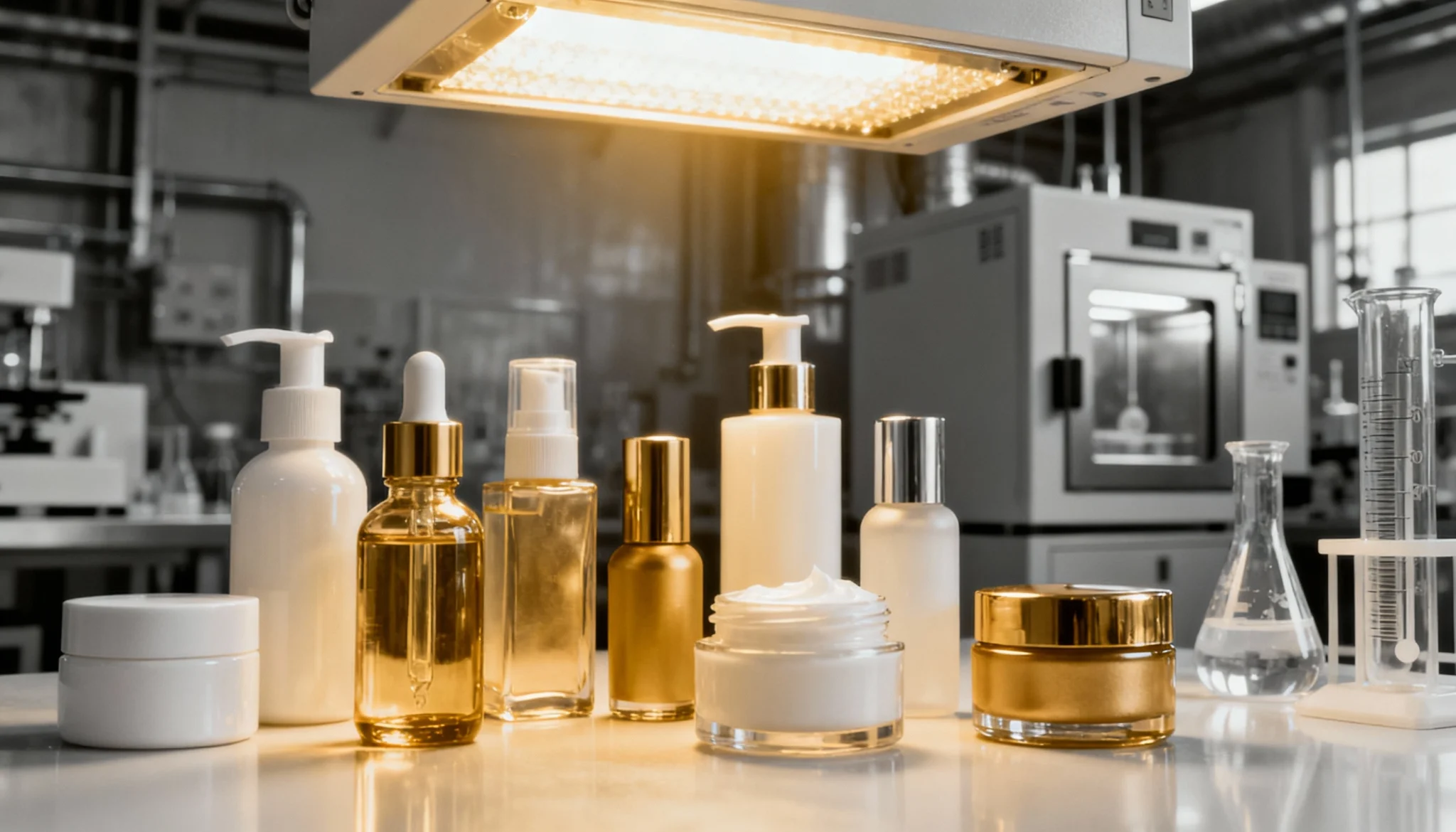
Behind every jar of cream or bottle of cosmetic oil lies a long chain of precise steps carried out inside a factory. Understanding this process helps brand founders choose the right manufacturing partner and speak the same language as production and quality teams. Here is the journey of a cosmetic product, from first idea to the consumer's hands.
Stage 1: Formula Development
Everything starts in the development lab. The formulation team defines the product's purpose: a moisturizing cream, a hair oil, a natural soap. Based on that goal, they select the active and base ingredients, such as argan oil, shea butter or botanical extracts. A formula typically goes through several trial versions, evaluated for texture, scent and stability before final approval.
Stage 2: Stability and Safety Testing
Before real production begins, the formula undergoes stability testing that simulates different storage conditions: heat, humidity and light. The goal is to confirm the product keeps its properties throughout its shelf life. The preservation system is also tested to make sure the product can resist microbial contamination. This step is essential for any product aiming at regulated markets.
Stage 3: Mixing and Manufacturing
Once the formula is approved, production moves to the factory floor. Raw materials are weighed precisely and blended in dedicated tanks, following a defined sequence and controlled temperatures. For emulsions such as creams, the oil phase is combined with the water phase under strong mixing to achieve a smooth, uniform texture. Every operation is recorded in the batch record to guarantee traceability.
Stage 4: Filling and Packaging
After the bulk mixture is confirmed to meet specifications, it is filled into its final containers on manual, semi-automatic or fully automatic lines. This stage includes:
- Filling each container to a precise weight or volume
- Capping and sealing to protect product integrity
- Labeling with batch number and expiry date
- Secondary packaging and preparation for shipment
Quality Control at Every Step
Quality control is not just an end-of-line check; it accompanies the product throughout. Raw materials are inspected on arrival, the mixing process is monitored during manufacturing, and samples from every batch are examined before release. Factories that follow good manufacturing practices also keep retained reference samples of each batch for several years.
Standard Formulas Versus Fully Custom Development
Not every brand needs to start from a blank page, and understanding the difference between these two paths helps you plan your budget and timeline realistically.
Working From an Existing Base Formula
Many manufacturers offer a catalogue of proven base formulas — a hydrating body lotion, a nourishing hair oil, a gentle facial cleanser — that can be lightly adjusted with your preferred scent, a small tweak to texture, or an additional active ingredient. This route is faster and less costly, and it is a common way for new brands to launch their first collection while limiting risk.
Building a Fully Custom Formula
A fully custom formula starts from your specific brief: a particular texture, a signature ingredient combination, or a claim you want to support with the right actives. It takes longer and usually involves several rounds of sampling, but it gives you a formula that is genuinely yours, which matters for brands building long-term differentiation.
How Long Does the Whole Process Take?
Timelines vary by product complexity, but as a general pattern, a standard-base product can move from brief to first samples in a few weeks, while a fully custom formula with full stability and safety testing often takes several months from concept to first production batch. Building this time into your launch plan from day one avoids unrealistic deadlines and rushed decisions later.
Why This Matters for Brand Owners
When you understand these stages, you can ask your manufacturer the right questions: How do you test stability? What does your traceability system look like? What is your filling line capacity? These questions separate professional partners from the rest and protect your brand in the long run.
At Assil Ouargane in Morocco, we manufacture natural personal-care products built on argan oil and authentic Moroccan ingredients, and we offer private-label manufacturing for brands across many markets. Thinking about launching your own product? Request a quote through our website.