A customer once asked for an oil gentle enough for her elderly mother's skin, thin, quick to redden, unable to tolerate most rich oils or strong fragrance. Apricot kernel oil is usually the first answer a formulator reaches for, not because it works miracles, but because its composition and texture have earned it a solid reputation as one of the gentlest carrier oils available.
A close cousin of sweet almond oil
Apricot kernel oil's composition sits very close to sweet almond oil, dominated by oleic acid at roughly fifty-five to seventy percent, with linoleic acid around twenty to thirty percent, and a limited share of saturated fat. That balance gives it a relatively light texture compared to denser oils like avocado, while its natural vitamin E content lends it some resistance to oxidation.
Why it suits sensitive and mature skin
Apricot kernel oil is generally rated around two on the comedogenicity scale, a low-to-moderate level that makes it a reasonable choice even for skin that reacts poorly to richer oils. Its soft texture and moderate absorption, neither as fast as grapeseed nor as slow as avocado, make it comfortable on thin skin, whether that means mature skin that has lost some of its elasticity or skin prone to occasional redness and reactivity.
A necessary caution on nut allergy
Apricot kernels belong botanically to the same plant family as almonds, which makes cross-reactivity a real possibility for anyone with a known allergy to tree nuts or to almonds specifically. Anyone with a history of nut allergy should avoid this oil or check with a doctor before using it, and even without a known allergy, it is worth patch-testing a small amount on the inner forearm and waiting a full day before applying it more broadly to the face or body.
Shelf life and signs of freshness
Apricot kernel oil holds its quality for about twelve months from pressing when stored cool and away from direct light, thanks to its natural vitamin E content, which slows oxidation somewhat compared to oils higher in polyunsaturated fat. Any shift in scent toward sourness or something resembling paint means the oil has started to turn and should be replaced.
Why cosmetic-grade kernel oil is not the same as raw kernels
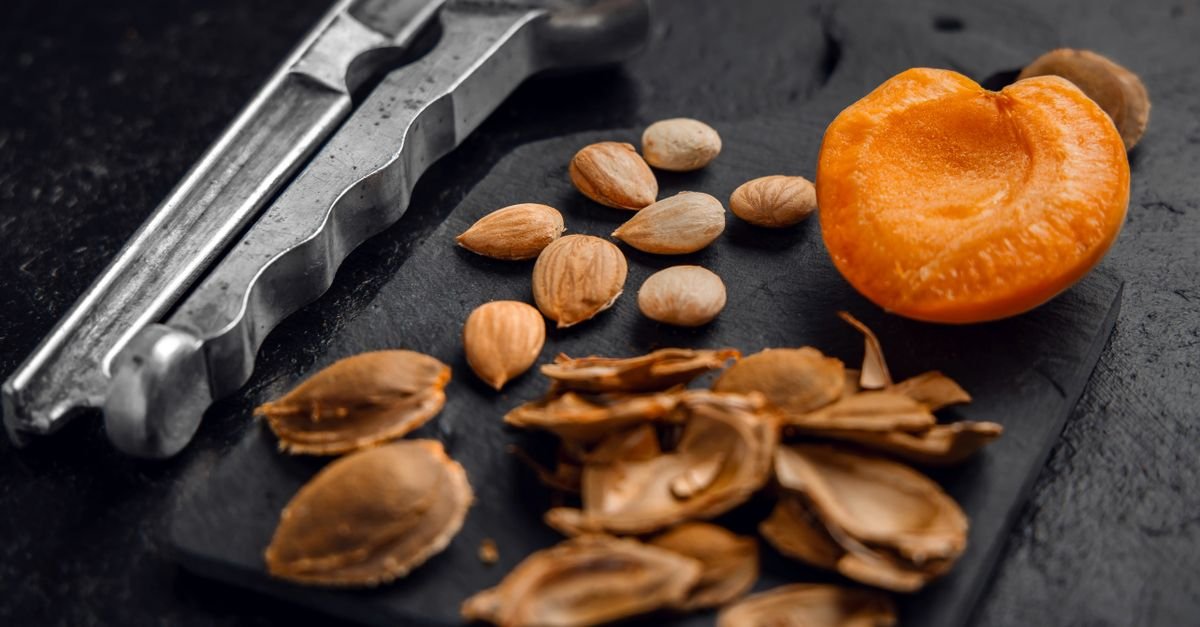
Raw apricot kernels, particularly bitter varieties, contain compounds that release cyanide-related substances when eaten in quantity, which is why raw kernels are not something to consume freely. Cosmetic apricot kernel oil is a different matter: it is pressed from the kernel and, in reputable production, refined to cosmetic grade, intended for topical use on skin rather than ingestion. This distinction matters mainly for labeling clarity and for keeping any bottle away from young children who might be tempted to taste a pleasant-smelling oil, not because the pressed cosmetic product itself carries the same risk as eating raw kernels.
Where it earns its place in a routine
Apricot kernel oil turns up often in face creams for sensitive and mature skin, in gentle massage oils, around the eye area where skin is thinner, and in products meant to nourish lightly without weight. It is also valued across sensitive-skin formulations generally, thanks to its nearly neutral scent and non-tacky finish.
The right proportion depends on the product:
- Facial serum or oil for sensitive skin: usable neat or blended, up to one hundred percent.
- Body creams and lotions: typically five to fifteen percent of the formula.
- Massage oils for sensitive skin: used at a high concentration, close to pure.
- Eye contour products: included at a small proportion within a light texture.
Chosen with care and used with the nut-allergy caution in mind, apricot kernel oil remains one of the most trustworthy natural oils for skin that needs real gentleness rather than a marketing promise. Assil Ouargane presses and formulates natural Moroccan oils and skincare for brands building their own line under their own name, and welcomes quote requests through the website.