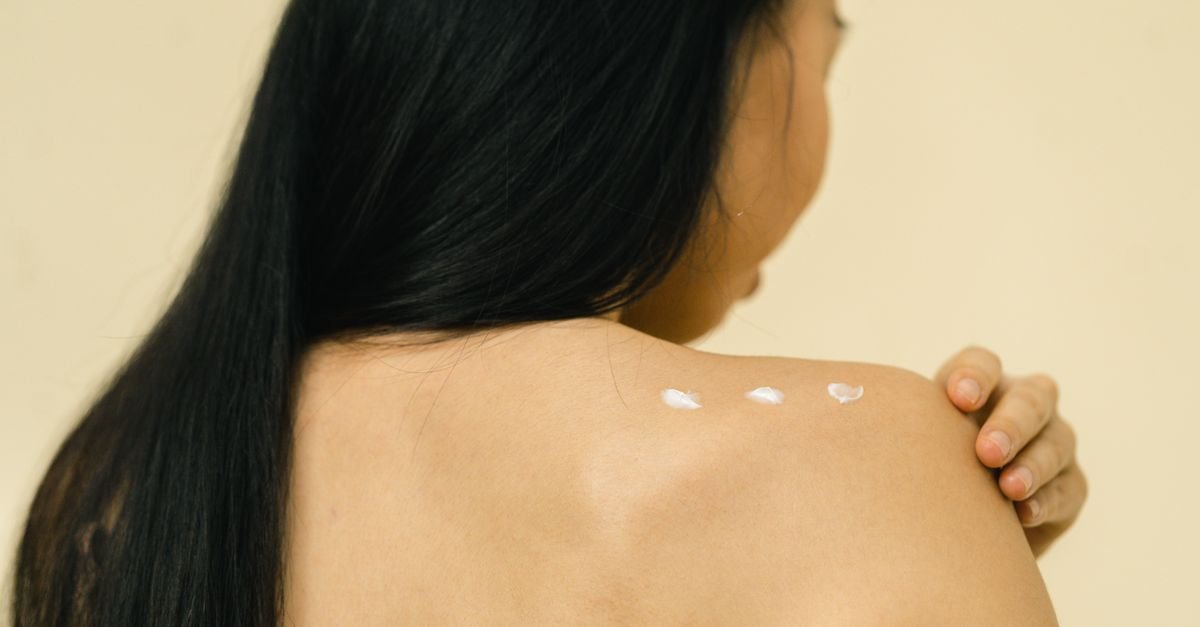

A new cream feels fine for three days, then the fourth morning arrives with redness that was not there before. That delay is exactly why a quick dab on the wrist the night before rarely catches what matters. A proper patch test takes longer than most people give it, and the extra days are the whole point.
Why 24 hours misses so much
Immediate irritation, the stinging or redness that shows up within minutes, is easy to catch with a short test. Allergic contact dermatitis, the reaction most people actually worry about, is different: it can take anywhere from 48 hours to a full week to appear, because it depends on the immune system building up a response rather than an instant chemical reaction. A product that looks perfectly clear after one night can still cause a reaction on day five.
How to patch test properly
- Choose the right spot: the inner forearm or behind the ear, skin that is thin enough to react visibly but not exposed to sun or friction.
- Apply a small amount, undiluted: the same concentration you would actually use, not a watered-down version.
- Leave the area uncovered and unwashed: avoid soap, sun and other products on that exact spot for the full test period.
- Check at 24, 48 and 72 hours, and again at day seven: most true reactions show up in that window, not in the first few hours.
- Stop immediately at any sign of a reaction: redness, itching, swelling or small bumps mean the test has done its job.
What counts as a reaction, and what does not
Mild, brief tingling right after application, especially with acids or fragrance, often fades within minutes and is not necessarily a reason to stop. Redness that builds rather than fades, itching that persists, swelling, small blisters or bumps that appear a day or more later are signs of a real reaction, and the product should not go on the face regardless of how good it felt on day one.
Patch testing new oils and actives from us
Argan oil and prickly pear seed oil are generally well tolerated, including on sensitive skin, but generally is not always, and anyone with a known nut allergy should be especially careful with argan oil and discuss it with a doctor before use, since it comes from a tree nut. The same seven-day process applies to a new natural oil exactly as it does to a new synthetic active. Natural does not mean risk-free, it means a different, usually gentler, risk profile.
When a patch test is not enough
A clean patch test lowers the odds of a bad surprise, but it does not guarantee one will never happen, and it is not a substitute for stopping a product the moment the full-face version of it starts causing problems. Anyone with a history of severe allergic reactions, or a diagnosed skin condition, should talk to a dermatologist or allergist before testing new products rather than relying on a home patch test alone.
A note on fragrance and essential oils
Fragrance, whether synthetic or from essential oils, is one of the most common triggers of both immediate irritation and delayed allergic reactions, and it deserves its own patch test even inside a product that has otherwise been fine for years, since reformulations happen without much notice. Anyone testing a product for a baby or young child should use a longer window, closer to ten days, and a more conservative spot, since children's skin reacts differently and communicates discomfort less clearly than an adult's does. During pregnancy, a dermatologist's input before testing new actives is worth the extra step, particularly for anything beyond a plain oil or a fragrance-free moisturizer.
A week sounds slow for something as small as a dab of cream, but it is the difference between catching a real reaction and finding out the hard way, on your face, three days after you decided it was fine. Assil Ouargane manufactures argan oil, prickly pear seed oil and other natural Moroccan ingredients for skincare brands that care about this kind of safety detail, and we take quote requests for private-label production through our website.